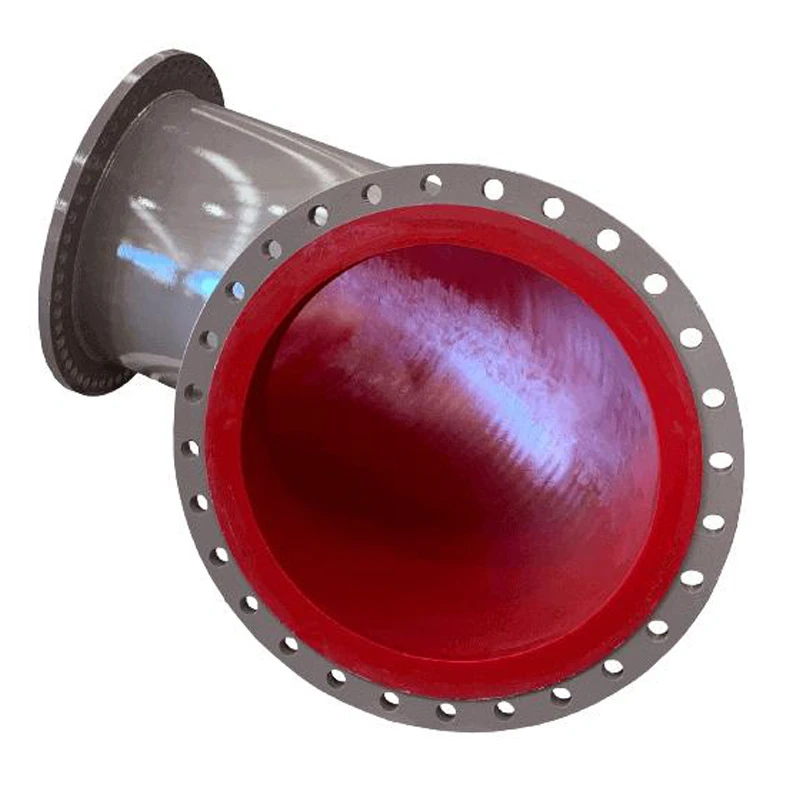
Understanding the Pivotal Role of types of cyclone separator in Modern Industrial Processes In the realm of industrial separation technologies, the types of cyclone separator stand as a cornerstone for efficient particulate removal from gas or liquid streams. Their fundamental operating principle, leveraging centrifugal force to separate solid particles or liquid droplets from a carrier fluid, makes them indispensable across a vast array of sectors. From enhancing air quality in manufacturing facilities to refining critical chemical processes, the versatility and robust design of cyclone separators have cemented their position as a preferred solution for demanding applications. This comprehensive guide delves into the intricate world of these essential devices, exploring their diverse configurations, the meticulous engineering behind their production, their critical role in optimizing industrial operations, and the strategic considerations for their selection and deployment. We will examine the core technical parameters that define their performance, analyze real-world application scenarios, and provide insights into custom solutions tailored to specific industrial challenges. Understanding the nuanced differences between various types of cyclone separator is not merely an academic exercise; it is crucial for engineers, plant managers, and procurement specialists seeking to achieve optimal process efficiency, comply with stringent environmental regulations, and reduce operational costs. The efficiency of a cyclone separator is profoundly influenced by its design, the fluid properties, and the characteristics of the particulates, necessitating a deep understanding of each variant's capabilities and limitations. Our exploration will also highlight critical advancements in design and materials science that continue to push the boundaries of what these seemingly simple devices can achieve, particularly in challenging environments requiring high-efficiency separation or extreme durability. Furthermore, the integration of advanced computational fluid dynamics (CFD) in the design phase allows for unparalleled precision in predicting performance, minimizing pressure drop, and maximizing collection efficiency across different types of cyclone separator, ensuring that modern solutions are not only effective but also highly energy-efficient. The evolution of industrial processes has continuously driven the demand for more effective and specialized separation techniques. This continuous innovation has led to a proliferation of types of cyclone separator, each optimized for distinct operational parameters and particle characteristics. For instance, the fine particulate matter often encountered in pharmaceutical manufacturing or advanced material synthesis necessitates the precision offered by a micro cyclone separator, a testament to the engineering advancements in this field. Conversely, heavy-duty applications, such as those in mining or construction, require robust solutions capable of handling abrasive slurries, for which a sand cyclone separator is specifically engineered. The selection process is rarely straightforward, involving a careful evaluation of factors such as particle size distribution, gas or liquid flow rates, operating temperature and pressure, and the desired separation efficiency. A thorough understanding of these variables is paramount for making informed decisions that directly impact a plant's productivity, environmental footprint, and long-term operational viability. This article aims to equip industry professionals with the knowledge required to navigate these complexities, providing a technical yet accessible overview of the principles, designs, and applications of these vital industrial components. We will also touch upon the economic implications of choosing the right separator, considering factors such as initial capital expenditure versus long-term operational savings through reduced maintenance, energy consumption, and improved product purity. The global push for sustainability and stricter emission controls further underscores the importance of selecting highly efficient and reliable types of cyclone separator that can contribute to a greener industrial landscape by minimizing waste and maximizing resource recovery. This commitment to sustainability is often reflected in the design philosophy of leading manufacturers, who prioritize materials that offer extended operational lifespans and designs that facilitate easy maintenance and reduced energy consumption, thereby lowering the total cost of ownership over the entire lifecycle of the equipment. Dissecting the Diverse Types of Cyclone Separator : Design and Functionality The classification of types of cyclone separator primarily revolves around their geometry, inlet design, and the specific application they are designed for. Each variation aims to optimize particular performance metrics, such as collection efficiency, pressure drop, or throughput capacity. The most common distinctions include standard cyclones, high-efficiency cyclones, high-throughput cyclones, and specialized units like the micro cyclone separator and sand cyclone separator. Standard cyclones, often characterized by a relatively large diameter and a tangential inlet, are well-suited for separating coarser particles (typically >10 µm) with moderate pressure drop. Their simplicity of design and construction makes them cost-effective for bulk separation tasks, commonly found in wood processing, cement plants, and grain handling facilities. They operate by introducing the dusty gas stream tangentially into a cylindrical chamber, creating a swirling vortex. Centrifugal force drives the heavier particles towards the wall, where they lose momentum and fall into a hopper, while the cleaner gas exits through an inner vortex finder. The design parameters such as body diameter, cone length, inlet area, and outlet diameter are carefully balanced to achieve the desired separation characteristics. While not offering the highest efficiencies for fine particulates, their robustness and low maintenance requirements make them a workhorse in many industrial settings. High-efficiency cyclones, on the other hand, are engineered to capture finer particles, often down to 2-5 µm, by increasing the centrifugal force exerted on the particles. This is typically achieved by reducing the cyclone diameter, increasing the length-to-diameter ratio (L/D ratio), and optimizing the inlet and outlet geometries. The smaller diameter results in a tighter vortex and higher tangential velocities, which enhances particle collection. However, this improved efficiency often comes at the cost of increased pressure drop across the unit, leading to higher energy consumption for the fan or pump. These types of cyclone separator are frequently employed as pre-cleaners for more advanced filtration systems, or in applications where the capture of smaller particles is critical, such as in catalyst recovery, pharmaceutical production, or fine powder processing. Multi-cyclone systems, which consist of numerous small-diameter cyclones operating in parallel, are another manifestation of high-efficiency designs, offering high volumetric flow rates while maintaining excellent fine particle collection. Each individual cyclone in a multi-cyclone array functions as a miniature high-efficiency separator, collectively providing significant processing capacity. The sophisticated design of high-efficiency cyclones often incorporates features such as volute inlets or tangential entries with specific vane angles to further optimize flow patterns and minimize turbulence, ensuring stable and predictable performance even under fluctuating load conditions. High-throughput cyclones prioritize processing large volumes of gas or liquid with acceptable efficiency, often for coarser particles. These units feature larger diameters and modified inlet designs to minimize pressure drop and allow for higher flow rates. While their collection efficiency for very fine particles might be lower than high-efficiency models, their ability to handle massive volumes makes them ideal for applications such as primary dust collection in large industrial furnaces or power plants. The choice among these primary types of cyclone separator depends critically on the balance between efficiency, pressure drop, and capital cost. The specific operational environment, including temperature, pressure, and the corrosive or abrasive nature of the fluid and particles, also plays a significant role in material selection and structural design. For instance, in applications involving high temperatures, specialized refractory linings or exotic alloys might be required to ensure structural integrity and prolong operational life. Conversely, abrasive slurries necessitate the use of abrasion-resistant materials like ceramics or hardened steel in critical wear areas, such as the cone tip and inlet section. Specialized Cyclone Separator Varieties: Micro and Sand Applications The micro cyclone separator represents a specialized category designed for ultra-fine particle separation, typically targeting particles in the sub-micron to a few-micron range. These are characterized by extremely small diameters, often in the range of centimeters or even millimeters, leading to extremely high tangential velocities within the unit. The increased centrifugal force at these scales allows for the separation of particles that would otherwise escape larger, conventional cyclones. Applications for micro cyclone separator include pharmaceutical powder classification, cleanroom air purification, fine chemical processing, and advanced material synthesis where even minute impurities can compromise product quality. Their precision engineering demands stringent manufacturing tolerances and advanced material selection to withstand the high velocities and potential abrasion from very fine, hard particles. The design challenges for micro cyclones are significant, encompassing not only the fluid dynamics but also the manufacturing precision required to create such small, intricate components that can withstand operational stresses. They often operate in multi-stage configurations, with arrays of micro cyclones working in parallel or series to achieve target efficiency levels for ultra-fine particulates, making them integral components in advanced industrial air pollution control and product recovery systems where even trace amounts of fine dust can have significant implications for health, safety, or product quality. The pressure drop across these units can be considerably higher due to the extremely compact design and high flow velocities, necessitating careful system design to manage energy consumption. In contrast, the sand cyclone separator, often referred to as a hydrocyclone when used in liquid-solid separation, is specifically engineered for handling abrasive, high-density solids like sand, grit, and other mineral particles from liquid streams. These types of cyclone separator find extensive use in mining, oil and gas drilling (desanding and desilting), wastewater treatment, and aggregate washing operations. Key design features include robust, abrasion-resistant internal linings (e.g., polyurethane, ceramic, rubber) and specialized inlet configurations that minimize wear while maximizing separation efficiency for dense particles. Unlike gas cyclones, hydrocyclones typically operate with a continuous liquid feed, with the heavier solids exiting through an underflow orifice at the bottom, and the lighter fluid (overflow) exiting through the top. The unique challenges in designing a sand cyclone separator involve managing high solids loading, extreme abrasive wear, and maintaining stable separation performance under varying feed conditions. Their conical shape, tangential entry, and apex orifice are crucial for creating the intense centrifugal forces needed to efficiently separate high-density solids. The wear resistance of materials used in these hydrocyclones is paramount for ensuring a long operational life and minimizing maintenance downtime. Modern sand cyclone separators often incorporate replaceable wear parts, facilitating quick and cost-effective maintenance. The ability to effectively remove sand and other solid contaminants is crucial for protecting downstream equipment, such as pumps, valves, and heat exchangers, from damage and blockages, thereby extending their operational lifespan and reducing overall maintenance costs in critical industrial processes. The Meticulous Manufacturing Process and Quality Assurance for Types of Cyclone Separator The production of high-performance types of cyclone separator is a complex process demanding precision engineering, advanced material science, and rigorous quality control. The manufacturing journey begins with the selection of appropriate materials, which are chosen based on the intended application's environmental conditions, including temperature, pressure, corrosiveness, and abrasiveness of the process fluid and particulates. Common materials include carbon steel for general applications, stainless steels (304, 316, 316L) for corrosive environments, and specialized alloys like Hastelloy or Inconel for extreme chemical resistance or high temperatures. For abrasive applications, internal surfaces may be lined with wear-resistant materials such as ceramics (e.g., alumina, silicon carbide), polyurethane, or specific grades of rubber. The precise fabrication of each component is critical to ensuring optimal aerodynamic or hydrodynamic performance. This often involves advanced manufacturing processes like CNC machining for critical components such as the vortex finder and the dust outlet, ensuring dimensional accuracy and surface finish that directly impact separation efficiency and pressure drop. The conical section, which is vital for effective particle separation, typically undergoes precise forming processes, such as rolling or pressing, followed by meticulous welding to ensure structural integrity and a smooth internal surface that minimizes particle re-entrainment. Forging and casting processes are also employed for specific components where high strength, complex geometries, or unique material properties are required. For example, some specialized inlets or collection hoppers might be cast to ensure a seamless, robust structure. Welding procedures are meticulously controlled and performed by certified professionals, often adhering to standards such as ASME Boiler and Pressure Vessel Code, to guarantee the integrity of pressure-containing parts. Post-weld heat treatment may be applied to relieve residual stresses and enhance material properties, particularly for high-temperature or critical applications. Surface treatments, such as painting, galvanizing, or specialized coatings, are applied to external surfaces for corrosion protection and aesthetic appeal, while internal surfaces may receive specialized linings or polishing to prevent material buildup and enhance flow characteristics. The entire manufacturing process, from raw material inspection to final assembly, is subjected to stringent quality control measures. This includes non-destructive testing (NDT) methods such as ultrasonic testing (UT), radiographic testing (RT), magnetic particle testing (MPT), and liquid penetrant testing (LPT) to detect any internal or surface flaws in materials and welds. Dimensional inspections are conducted at various stages to ensure adherence to design specifications, which are crucial for the aerodynamic performance of the cyclone. Adherence to international inspection standards is paramount for ensuring the reliability and performance of types of cyclone separator. Manufacturers typically comply with ISO 9001 for quality management systems, ensuring consistent production quality. For specific industries, compliance with standards such as ANSI/AMCA (Air Movement and Control Association) for air-handling equipment, ASME (American Society of Mechanical Engineers) for pressure vessels, and API (American Petroleum Institute) for oil and gas applications, is often a prerequisite. These certifications and standards provide assurance of the product's safety, performance, and durability. Beyond manufacturing, the expected lifespan of a cyclone separator is significantly influenced by its material selection, design, and the abrasiveness/corrosiveness of the operational environment. A well-designed and properly maintained carbon steel cyclone might last 10-15 years in non-abrasive applications, while units with specialized linings or constructed from exotic alloys can exceed 20-30 years in highly aggressive environments. Regular maintenance, including inspection for wear and tear, especially in the cone section and inlet, and prompt replacement of wear-resistant linings, can significantly extend the operational life. Preventive maintenance schedules are often recommended by manufacturers based on the specific application and projected wear rates. The application of these meticulously manufactured types of cyclone separator spans a vast array of industries, each benefiting from their distinct advantages. In the petrochemical sector, they are vital for catalyst recovery in fluid catalytic cracking (FCC) units, ensuring maximum product yield and preventing catalyst loss, thereby offering significant economic advantages. They are also used for particle removal from flare gas streams, contributing to environmental compliance. In metallurgy, cyclones are indispensable for dust collection in smelting operations, reducing emissions and recovering valuable metal dust. For instance, in steel production, they capture iron oxide dust from blast furnace gas, which can then be recycled. In the water and wastewater treatment industry, hydrocyclones (a type of sand cyclone separator) are used for desanding and primary solids separation, protecting pumps and other equipment from abrasive wear and reducing the load on downstream filtration systems. Their ability to efficiently remove particulate matter translates into tangible advantages such as energy savings due to reduced system pressure drop and improved airflow, effective corrosion resistance through appropriate material selection, and significantly extended equipment lifespan. For instance, by effectively removing abrasive particles upstream, the operational life of expensive downstream equipment like fans, pumps, and heat exchangers is substantially prolonged, leading to lower maintenance costs and reduced downtime. This holistic approach to design, manufacturing, and application ensures that cyclone separators are not just components but critical enablers of efficient, safe, and sustainable industrial operations worldwide. Critical Technical Parameters and Performance Metrics for Types of Cyclone Separator The performance of any of the types of cyclone separator is quantified by several key technical parameters that engineers and process designers meticulously evaluate. Understanding these metrics is essential for selecting the appropriate unit for a given application and predicting its operational efficiency. The primary parameters include the cut point (d50), collection efficiency, and pressure drop. The cut point, often denoted as d50, is the particle diameter at which 50% of the particles are captured by the cyclone, and 50% escape with the gas or liquid stream. A smaller cut point indicates a more efficient cyclone, capable of separating finer particles. For example, a micro cyclone separator will have a significantly lower d50 compared to a standard cyclone. This parameter is directly influenced by the cyclone's geometry (diameter, length, inlet/outlet dimensions), the density of the particles, and the viscosity and velocity of the carrier fluid. Engineers often use empirical correlations or computational fluid dynamics (CFD) simulations to predict the cut point for various designs and operating conditions. Optimizing the cut point is often a balancing act, as reducing it typically leads to an increase in pressure drop and higher energy consumption. Collection efficiency, sometimes referred to as fractional efficiency or overall efficiency, quantifies the percentage of particles removed from the gas or liquid stream. Overall efficiency considers all particle sizes, while fractional efficiency describes the collection efficiency for specific particle size ranges. High-efficiency types of cyclone separator aim for collection efficiencies exceeding 90-95% for their target particle sizes. Factors influencing collection efficiency include particle size distribution, particle density, gas/liquid velocity, cyclone diameter, and the presence of agglomeration. For instance, irregular particle shapes or highly cohesive particles can sometimes reduce efficiency. Pressure drop refers to the reduction in pressure of the carrier fluid as it passes through the cyclone. It is a critical operational cost factor, as higher pressure drop requires more energy to drive the fan or pump. There is an inherent trade-off between collection efficiency and pressure drop; generally, designs that achieve higher efficiency (smaller cut point) do so by increasing fluid velocity or creating tighter vortices, both of which result in a higher pressure drop. Therefore, selecting a cyclone involves optimizing this balance to meet separation goals while minimizing operational energy consumption. The L/D ratio (Length-to-Diameter ratio) of the cyclone's body and cone also significantly impacts performance. A longer cone generally leads to better separation efficiency by providing more residence time for particles to migrate to the wall, but it also increases pressure drop and overall unit height. Furthermore, parameters like inlet velocity, outlet diameter, and the design of the dust discharge system (e.g., rotary valve, gravity discharge) also play crucial roles. Inlet velocity must be carefully controlled; too low a velocity may lead to insufficient centrifugal force for separation, while too high a velocity can cause re-entrainment of collected particles or excessive wear. The outlet diameter, specifically of the vortex finder, dictates the path of the cleaned fluid and impacts both efficiency and pressure drop. An optimized design ensures minimal turbulence and maximal separation. For instance, the inlet velocity for a typical gas cyclone can range from 10 to 30 m/s, depending on the desired balance between efficiency and pressure drop. For hydrocyclones, inlet pressures typically range from 5 to 50 psi. The choice of discharge mechanism is vital for ensuring continuous and effective removal of collected material without short-circuiting the gas flow or causing blockages. For example, a rotary airlock valve is commonly used for continuous discharge of dry solids, while a water seal or dipleg might be used for wet applications or to prevent air ingress. Regular monitoring of these parameters during operation is essential for troubleshooting and maintaining peak performance. Deviations from expected pressure drop or a decrease in collection efficiency can indicate issues such as wear, blockage, or changes in process conditions, necessitating immediate attention to prevent system degradation or product contamination. Comparative Technical Specifications for Types of Cyclone Separator To further illustrate the distinct capabilities of various types of cyclone separator, the table below provides a comparative overview of typical technical parameters. These values are indicative and can vary significantly based on specific design, manufacturer, and operating conditions. This data is synthesized from general industry benchmarks and design principles for different cyclone categories, reflecting common performance ranges observed in industrial applications. Parameter Standard Cyclone (Gas) High-Efficiency Cyclone (Gas) Micro Cyclone Separator (Gas) Sand Cyclone Separator (Hydrocyclone - Liquid) Typical Diameter Range 0.5m - 2.5m 0.1m - 1.0m (Single unit) 0.01m - 0.1m (Multi-unit arrays) 0.1m - 1.2m Typical Cut Point (d50) >10 µm 2 - 10 µm 0.5 - 2 µm 15 - 150 µm (Solids) Overall Collection Efficiency 70% - 90% 90% - 99% 95% - 99.9% 80% - 98% (for target solids) Typical Pressure Drop 200 - 800 Pa (0.8 - 3.2 in H2O) 800 - 2500 Pa (3.2 - 10 in H2O) 2500 - 5000+ Pa (10 - 20+ in H2O) 10 - 70 kPa (1.5 - 10 psi) Inlet Velocity/Pressure 15 - 25 m/s 18 - 30 m/s 20 - 40 m/s 35 - 350 kPa (5 - 50 psi) Typical Materials of Construction Carbon Steel, Stainless Steel Stainless Steel, High-Performance Alloys Stainless Steel, Ceramic-lined, Glass Steel with Rubber/Polyurethane/Ceramic Linings Applicable Particle Types Coarse Dust, Wood Chips, Granules Fine Dust, Powders, Catalysts Ultra-fine Powders, Fumes, Aerosols Sand, Silt, Mineral Slurries This table clearly illustrates the specialized nature of different types of cyclone separator. For example, the micro cyclone separator achieves incredibly low cut points and high efficiencies, but this comes at the cost of higher pressure drop and the need for precision manufacturing and often multi-unit configurations. Conversely, a sand cyclone separator is designed to handle very high solids loading and abrasive conditions in liquid systems, with its efficiency measured differently (solids recovery vs. particle removal from gas). The selection of the most suitable cyclone is therefore a multi-criteria decision process, balancing initial investment, operational costs (energy consumption), required separation efficiency, and long-term maintenance implications. Factors like particle agglomeration, moisture content, and static charge can also influence real-world performance compared to theoretical predictions. An experienced manufacturer will consider all these variables, leveraging their expertise and computational tools to recommend the optimal solution for a client's specific process needs. Application Scenarios and Strategic Advantages of Various Types of Cyclone Separator The ubiquitous presence of types of cyclone separator across diverse industrial landscapes underscores their versatility and effectiveness in particle removal. Their application spans from heavy industries like petrochemicals and metallurgy to more sensitive sectors such as pharmaceuticals, food processing, and environmental protection. Each industry leverages specific cyclone characteristics to meet its unique operational and regulatory demands. In the petrochemical industry, for example, cyclones are critical components in fluid catalytic cracking (FCC) units, where they separate catalyst particles from hydrocarbon vapor streams to prevent catalyst loss and ensure product purity. The high temperatures and corrosive nature of these environments demand cyclones made from specialized alloys like Inconel or Hastelloy, often with refractory linings to withstand thermal stress and erosion. The design must minimize catalyst attrition while maximizing recovery, directly impacting the economic viability of the refining process. Similarly, in power generation, especially in coal-fired power plants, large diameter types of cyclone separator are used as pre-cleaners to remove coarse fly ash before gases enter more expensive baghouses or electrostatic precipitators, extending the life of downstream equipment and reducing overall filtration costs. Their robustness allows them to handle high dust loadings and fluctuating temperatures inherent in flue gas treatment. The metallurgical industry extensively utilizes cyclones for dust collection in various processes, including smelting, grinding, and material handling. Here, they capture valuable metal dust (e.g., iron, lead, zinc) for recycling, concurrently improving air quality and worker safety. The abrasive nature of metal dust often necessitates robust construction and wear-resistant liners. For instance, in ferroalloy production, cyclones effectively capture fine silica fume and other particulate matter, which are hazardous if released into the atmosphere and can also represent a significant loss of valuable material if not recovered. In the realm of environmental engineering and municipal services, particularly within water and wastewater treatment, the sand cyclone separator (hydrocyclone) is invaluable. These units efficiently remove sand, grit, and other settleable solids from influent water, protecting pumps, valves, and other mechanical equipment from abrasion and blockages. This pre-treatment step significantly reduces the maintenance burden and extends the lifespan of expensive downstream treatment components like clarifiers and filters. For example, in municipal wastewater treatment plants, desanding hydrocyclones are critical in the preliminary treatment phase, preventing accumulation of abrasive solids in aeration tanks and digesters, thus improving overall plant efficiency and reducing operational costs. Beyond heavy industry, specialized types of cyclone separator play pivotal roles in fine particle management. A micro cyclone separator is essential in pharmaceutical manufacturing for powder classification, ensuring precise particle size distribution for drug formulations, or for active pharmaceutical ingredient (API) recovery, minimizing product loss and ensuring process purity. In the food industry, they are used for separating food particles (e.g., flour dust, coffee bean husks) from air streams during processing, contributing to hygiene and product quality. Their stainless steel construction and easy-to-clean designs are paramount in these hygienic applications. The technical advantages of deploying appropriate types of cyclone separator are multifaceted. Foremost is energy efficiency; by acting as effective primary collectors, they reduce the load on energy-intensive final filters, leading to significant power savings over time. Their inherent design is often simpler than other filtration technologies, translating to lower capital expenditure and reduced maintenance requirements. Furthermore, specific materials and coatings ensure exceptional corrosion resistance, extending the operational lifespan in aggressive chemical environments. For example, in sulfuric acid plants, cyclones made with specialized corrosion-resistant alloys effectively manage acid mist removal from gas streams. Another significant advantage is their ability to handle high-temperature gas streams and high dust loadings, conditions where bag filters or electrostatic precipitators might struggle. Their lack of moving parts makes them inherently robust and reliable, requiring minimal supervision and maintenance compared to other separation technologies. This reliability translates directly into reduced downtime and higher overall plant productivity. The ability to recover valuable materials, as seen in metallurgical and chemical applications, adds an economic benefit that often offsets the initial investment. Moreover, by reducing particulate emissions, cyclones contribute significantly to environmental compliance, helping industries meet stringent air quality standards and avoid penalties. The modularity of multi-cyclone systems allows for scalable solutions, meaning systems can be designed to handle a wide range of flow rates by adding or removing individual cyclone units. This flexibility is particularly beneficial for processes with variable loads. Ultimately, the strategic selection and deployment of the right types of cyclone separator not only optimize process efficiency but also enhance safety, sustainability, and profitability across a broad spectrum of industrial applications, making them an enduring and evolving technology in particle separation. Strategic Manufacturer Comparison and Tailored Custom Solutions for Types of Cyclone Separator When sourcing types of cyclone separator, B2B decision-makers are faced with a diverse market of manufacturers, each offering distinct advantages in terms of design expertise, material quality, production capabilities, and after-sales support. A strategic approach to manufacturer comparison goes beyond mere price points, delving into critical aspects such as a company's proven track record, technological innovation, adherence to international standards, and capacity for custom engineering. Leading manufacturers differentiate themselves through their deep understanding of fluid dynamics and particle separation principles, leveraging advanced simulation tools like Computational Fluid Dynamics (CFD) to optimize cyclone designs for specific operational parameters. This allows for highly accurate predictions of cut point, pres